A fall at 2 AM shouldn't be found on the 6 AM round.
Breezz detects the fall, escalates it to whoever is on shift, and writes the record while it happens. One platform your staff will actually use — and a complete account of every incident and response.
The console
Every resident, every watch, one floor at a glance.
Who is online, what battery each watch is on, when each was last seen, and anything open right now. Staff open it on the phone already in their pocket — there's no terminal to walk back to.
No wiring, no ceiling units, no room-by-room retrofit. Roughly twenty minutes of training per person.
Detected and escalated
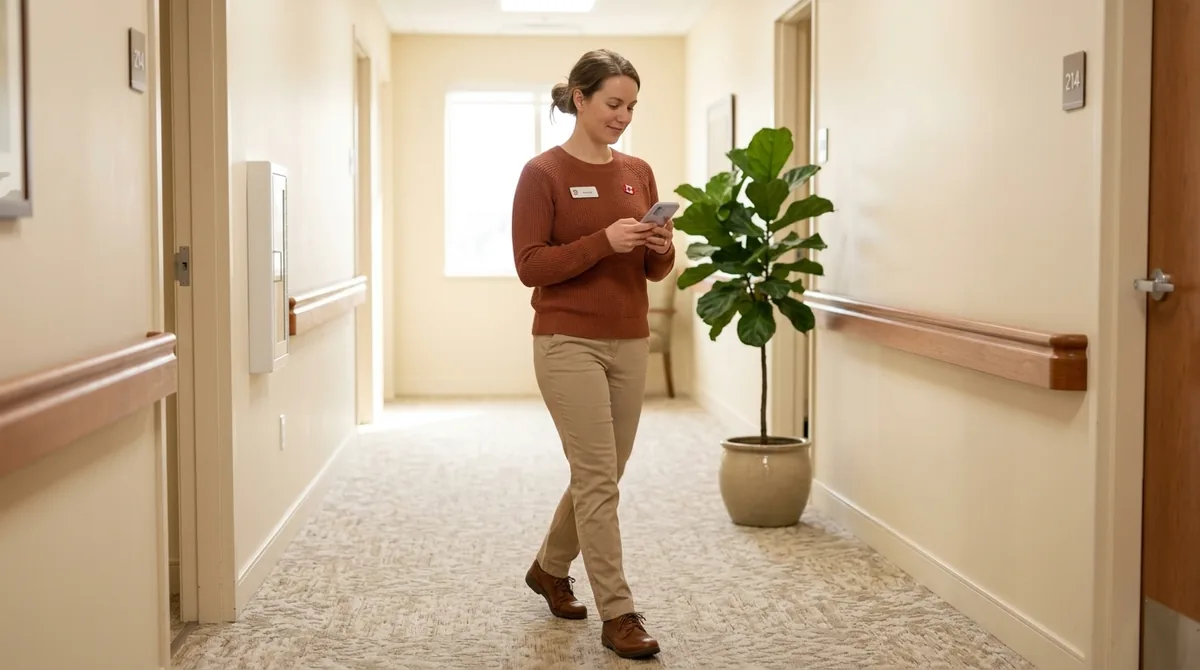
A fall or an SOS press starts a call chain that keeps going until someone answers. It doesn't wait for the next round, and it doesn't need anyone watching a screen.
Coverage past the door
GPS and zones you draw around the grounds. A resident in the garden, the car park or three streets away is covered exactly as well as one in bed.
It doesn't add to the noise
Health signals never enter the emergency chain — only falls, SOS, zones and low battery do. We review your alert volume with you every month.
The record
The record writes itself.
Event, time, who was called, who answered, when it cleared. Documented response times without anyone filling in a form afterwards, and without anyone reconstructing a night shift from memory.
It records what the system did and who responded — not a care note. Export any resident, any date range, as a PDF or a spreadsheet.
Illustration of an exported log. Names and times are examples.
Why this one gets worn
A device on a nightstand produces nothing.
Pendants have been the standard for years, and residents refuse them because wearing one announces decline to every visitor who walks past. That refusal is your coverage gap, your missing data, and your missing record.
Breezz does everything a pendant does and more, in the form factor of a watch. It's an everyday accessory your residents won't hesitate to wear.
Honestly compared
Nothing left off the table.
| Breezz | In-home pendants | Room sensors | Alert devices | |
|---|---|---|---|---|
| Automatic fall detection | Yes | Some models | Yes, in-room | Yes |
| Facility console | Yes | No | Yes | No |
| Coverage outside the room | Yes · GPS and zones | Rarely | No | Yes |
| Two-way voice from the device | Yes | Base unit only | No | Yes |
| Vitals trend over time | Yes | No | No | No |
| Family app | Yes | No | No | Yes |
| Installation | None | Base unit per room | Every room | None |
| Nothing to wear, remove or charge | No — it's worn, and it charges nightly | No | Yes — their real advantage | No |
Clinical wearables are a different product for a different buyer and we don't compare against them. Breezz is not a medical device. Readings show trends and are not a diagnosis.
Getting it live
Four weeks, no contractors.
Week one · Scoping
Week two · Fitting
Week three · Onboarding
Week four · Live
Before you ask
The limits, stated first.
You've been oversold before. Everything below is in the pilot agreement too.
It is not a medical device.
Breezz is not a medical device. Readings show trends and are not a diagnosis. It supports your staff's judgement, it does not replace it, and it does not reduce anyone's rounds. It will not tell you someone is having a medical event. Nothing on a wrist can.
It charges every day.
Twenty to thirty hours per charge. For a facility that means the watch goes on the charger during the evening round. The console shows every battery on the floor at a glance so nobody is guessing.
Showering yes, swimming no.
Fine in the shower and at the sink, which matters because bathrooms are where a great many falls happen. Not for pools or lap swimming. We won't quote you a rating, because ratings are tested in still clean water and don't describe hot water, soap and five years of knocks.
A resident who won't wear it isn't covered.
A room sensor covers a room whether anyone cooperates or not. A watch does not. We designed hard against refusal but we won't pretend it never happens. Through the admin console, you'll be able to track how much utilization each resident is getting.
Where is the data held?
Ask us directly and we'll answer factually - data is held in secure cloud servers in North America, and a migration to Canadian hosting is planned. Access is scoped per facility and per role, the wearer decides what is shared, and we sell data to nobody.
We're taking a small number of pilots
this year.
Tell us about your home and we'll come back within two working days.
Buying for one person instead? Join the family waitlist.